Author: rqkNKzuuUx67fBmPNyVcMrQX

  • PPP Forgiveness & Repayment: What Businesses Need to Know Now

    PPP Forgiveness & Repayment: What Businesses Need to Know Now

    A critical deadline is approaching for many of the businesses that have received loans under the Paycheck Protection Program (PPP), which was created in March 2020 by the CARES Act.

    If these borrowers don’t take action before the deadline expires, their loans will become standard loans, and the borrowers could be responsible for repaying the full amount plus 1% interest before the maturity date. In addition, some borrowers could face audits.


    PPP Basics

    PPP loans generally are 100% forgivable if the borrower allocates the funds on a 60/40 basis between payroll and eligible nonpayroll costs. Nonpayroll costs initially included only mortgage interest, rent, utilities and interest on any other existing debt, but the Consolidated Appropriations Act (CAA), enacted in late 2020, significantly expanded the eligible nonpayroll costs. For example, the funds can be applied to certain operating expenses and worker protection expenses.

    The CAA also withdrew the original requirement that borrowers deduct the amount of any Small Business Administration (SBA) Economic Injury Disaster Loan (EIDL) advance from their PPP forgiveness amount. And it provides that a borrower doesn’t need to include any forgiven amounts in its gross income and can deduct otherwise deductible expenses paid for with forgiven PPP proceeds.


    Forgiveness Filings

    PPP borrowers can apply for forgiveness at any time before their loans’ maturity date (loans made before June 5, 2020, generally have a two-year maturity, while loans made on or after that date have a five-year maturity). But, if a borrower doesn’t apply for forgiveness within 10 months after the last day of the “covered period” — the eight-to-24 weeks following disbursement during which the funds must be used — its PPP loan payments will no longer be deferred and it must begin making payments to its lender.

    That 10-month period is coming to an end for many so-called “first-draw” borrowers. For example, a business that applied early in the program might have a covered period that ended on October 30, 2020. It would need to apply for forgiveness by August 30, 2021, to avoid loan repayment responsibilities.

    Borrowers apply for forgiveness by filing forms with their lenders, who’ll then submit the forms to the SBA. The specific type of form needed to be filed is dependent on the amount of the loan and whether a business is a sole proprietor, independent contractor or self-employed individual with no employees.
    If the SBA doesn’t forgive a loan or forgives only part of it, the lender will notify the borrower when the first payment is due. Interest accrues during the time from disbursement of the loan proceeds to SBA remittance to the lender of the forgiven amount, and the borrower must pay the accrued interest on any amount not forgiven.

    Some businesses may have delayed filing their forgiveness applications to maximize their employee retention tax credits. That’s because qualified wages paid after March 12, 2020, through December 31, 2021, that are taken into account for purposes of calculating the credit amount can’t be included when calculating eligible payroll costs for PPP loan forgiveness. These businesses should pay careful attention to when their 10-month period expires to avoid triggering loan repayment.


    Audit Action

    Borrowers also should be aware of the possibility that they’ll be audited by the SBA’s Office of Inspector General, with support from the IRS and other federal agencies. The SBA will automatically audit every loan that’s more than $2 million after the borrower applies for forgiveness, but smaller loans may be subject to scrutiny, too.

    Although the SBA has established an audit safe harbor for loans of $2 million or less, that carveout applies only to the examination of the borrower’s good faith certification on the loan application that the “current economic uncertainty makes the loan request necessary to support the ongoing operations” of the business. The SBA also recently notified lenders that it’s eliminating the loan necessity requirement for loans of more than $2 million. Those borrowers will no longer need to complete a burdensome Loan Necessity Questionnaire.

    All borrowers, however, still might be audited on matters such as eligibility (for example, the number of employees), calculation of the loan amount, how the funds were used and entitlement to forgiveness. Borrowers that receive adverse audit findings may be required to repay their loans and, depending on the missteps uncovered, could face civil penalties and prosecution under the federal False Claims Act.

    Businesses that received loans of more than $2 million shouldn’t wait to prepare for their audits. They can begin to work with their CPAs now to gather and organize the documents and information that auditors are likely to request, including:

    • Financial statements
    • Income and employment tax returns
    • Payroll records for all pay periods within the applicable covered period
    • Calculation of full-time equivalent employees
    • Bank and other records related to how the funds were used (for example, canceled checks, utility bills, leases and mortgage statements)

    Note that some of this documentation will overlap with that required when filing the application for loan forgiveness.


    Act Now

    Businesses nearly always have a lot on their plates, so it’s not surprising that some might not have been laser-focused on the various dates relevant to their PPP loans. Now is the time to ensure that you file your forgiveness application in a timely manner and have the necessary documentation gathered to survive the SBA audit that may follow.

    The Jones & Roth PPP Loan Forgiveness Task Force helps businesses and nonprofits navigate the forgiveness application process with guidance, tools, and support. For more information, connect with our Jones & Roth PPP Loan Forgiveness Task Force.

  • Affordable Care Act Stands After Supreme Court Ruling

    Affordable Care Act Stands After Supreme Court Ruling

    In recent years, many taxpayers and CPA firms filed protective claims to amend tax returns for potential changes to the Affordable Care Act (ACA). On Monday, June 21st, the Supreme Court decided that the plaintiffs from California vs. Texas (127 AFTR 2d 2021-777) could not show that the minimum essential coverage provisions of the ACA was unconstitutional. 

    What does this mean? It means that taxpayers cannot amend prior years’ tax returns to remove the taxes imposed on Net Investment Income and additional Medicare Taxes. 

    If you have any questions, you should consult your tax advisor on whether the Supreme Court decision impacts your personal income tax return.


  • IRS to Begin Advance Child Tax Credit Payments July 15

    IRS to Begin Advance Child Tax Credit Payments July 15

    On July 15, millions of eligible families across the US will receive their first advanced payment for the expanded Child Tax Credit. For 2021 only, the IRS will send families half of their 2021 Child Tax Credit as automatic monthly payments from July through December. The remaining half of the credit will be applied when 2021 taxes are filed as a refundable credit.    

    The amount of the credit and the age limit have also increased:

    • For children under the age of six, the credit is up to $3,600
    • For children six and older, the credit is up to $3,000
    • Age limit raised from 16 to 17

    Taxpayers generally won’t need to do anything to receive the advance payments since the IRS will use the information it has on file for 2019 and 2020 taxes. Payments will be made via direct deposit for those who received direct deposit tax refunds. For all others, payment will be via paper check or debit card received in the mail. 

    Who is eligible for the Child Tax Credit?

    To qualify for the Child Tax Credit and the automatic advance monthly payments, you (and your spouse if you file a joint tax return) must have all of the following:

    • Filed a 2019 or 2020 tax return claiming the Child Tax Credit, or given the IRS your information using the non-filer tool.
    • A main home in the U.S. for more than half the year, or filed a joint return with a spouse who has a main home in the U.S. for more than half the year.
    • A qualifying child who is under age 18 at the end of 2021 and who has a valid Social Security number.
    • Income less than certain limits – see details below.

    Low income families who didn’t make enough and weren’t required to file 2019 or 2020 taxes still qualify to receive this crucial tax relief, but will need to take the additional step of registering using the Non-Filer Sign-Up Tool. 


    How much will I receive in Child Tax Credit payments? 

    The Child Tax Credit advance payments are based on several factors, including the age of your children and your income.


    AGE

    Age Full Amount of Child Tax Credit
    Ages 5 and younger   Up to $3,600 each child, with half of credit as $300 monthly payments
    Ages 6 to 17 Up to $3,000 each child, with half of credit as $250 monthly payments
    Age 18 $500 one-time check in 2022
    Ages 19 to 24, full-time college students $500 one-time check in 2022


    INCOME

    The credit is subject to a two-part modified adjusted gross income phase-out for 2021, the base $2,000 credit and the additional 2021 amount.

    The base credit of $2,000 ($166 per month) per qualifying child is gradually phased-out for joint filers with adjusted gross income of $400,000 or more. For single and head-of-household filers, the phase-out begins at $200,000.  

    For the portion of the credit exceeding $2,000 (the additional 2021 amount), this is gradually phased-out at the following adjusted gross income levels:

    • Married filing joint $150,000
    • Head-of-household $112,500
    • Single $75,000

    If your AGI is above these thresholds, the credit phases out by $50 for every $1,000 of income over the threshold.

    If your AGI is less than than the amounts specified above, you’ll receive the full amount of the credit based on the age of your qualifying child. 


    Can you show me an example of how the Child Tax Credit works?  

    Here’s an example from the White House’s new informational website on the Child Tax Credit: 

    Sam & Lee are a married couple making $100,000 a year. They filed a joint 2020 tax return and they have two children under the age of 6. Because they claimed 2 children on their 2020 tax return, they will receive part of their payment now, and will then claim the other half when they file their 2021 income tax return.

    Here’s what Sam & Lee will receive and when:

    • The total Child Tax Credit amount will be $7,200 ($3,600 credit for each child under age 6).
    • They will receive half, or $3,600, in 6 monthly installments of $600 each starting in July and continuing each month through December 2021.
    • They’ll receive the remaining $3,600 as a refundable credit when they file their 2021 tax return.


    What do I need to know about the new IRS online portals and tools? 

    The IRS has three online resources designed to help families navigate the advance monthly payments:

    1. Child Tax Credit Eligibility Assistant 
      Allows families to answer a series of questions to quickly determine whether they qualify for the advance credit. This is not a registration tool, merely a tool to help determine eligibility. 
    2. Child Tax Credit Update Portal
      Allows families to verify their eligibility for the payments and, if they choose, to unenroll, or opt-out of monthly payments to instead receive a lump sum credit when they file their 2021 tax return. This secure, password-protected tool is available to any eligible family with internet access and a smart phone or computer. Additional features planned for this summer and fall include the ability to: 
      • view payment history
      • edit bank account information or mailing addresses
      • update family status or child custody status
      • update changes in income
    3. Non-Filer Sign-Up Tool
      Helps families not normally required to file an income tax return to quickly register for the Child Tax Credit.

    Why would someone want to unenroll or opt-out of the advance payments? 

    If you receive advanced payments, but then end up not qualifying for the credit at the end of 2021, or even qualifying for a reduced credit, the excess advance received will need to be paid back with the 2021 tax filing. Why would this occur?  Any number of reasons, income could end up being too high in 2021, perhaps your main home was outside the U.S. for more than half of 2021, or maybe an ex-spouse or other family member ends up qualifying to claim the credit instead due to dependent status for 2021. 

    It is important to use the Child Tax Credit Update Portal to notify the IRS about any changes in your situation, so you can ensure you receive the correct Child Tax Credit amount. 


    Why is it important to consult with my Tax Advisor if I have questions?

    Though these tax changes are temporary and only apply to the 2021 tax year, they may present important cash flow and financial planning opportunities today. It is also important to note that the monthly advance of the Child Tax Credit is a significant change. The credit is normally part of your income tax return, and the choice to have the Child Tax Credit advanced will affect your refund or amount due when you file your return. 

    Your tax advisor can help you determine how much credit you may be entitled to and whether advance payments are appropriate. As always, planning ahead can help you maximize your family’s financial situation and position you for greater success. Please contact your Tax Advisor to discuss your specific situation. 


    Additional Resources:

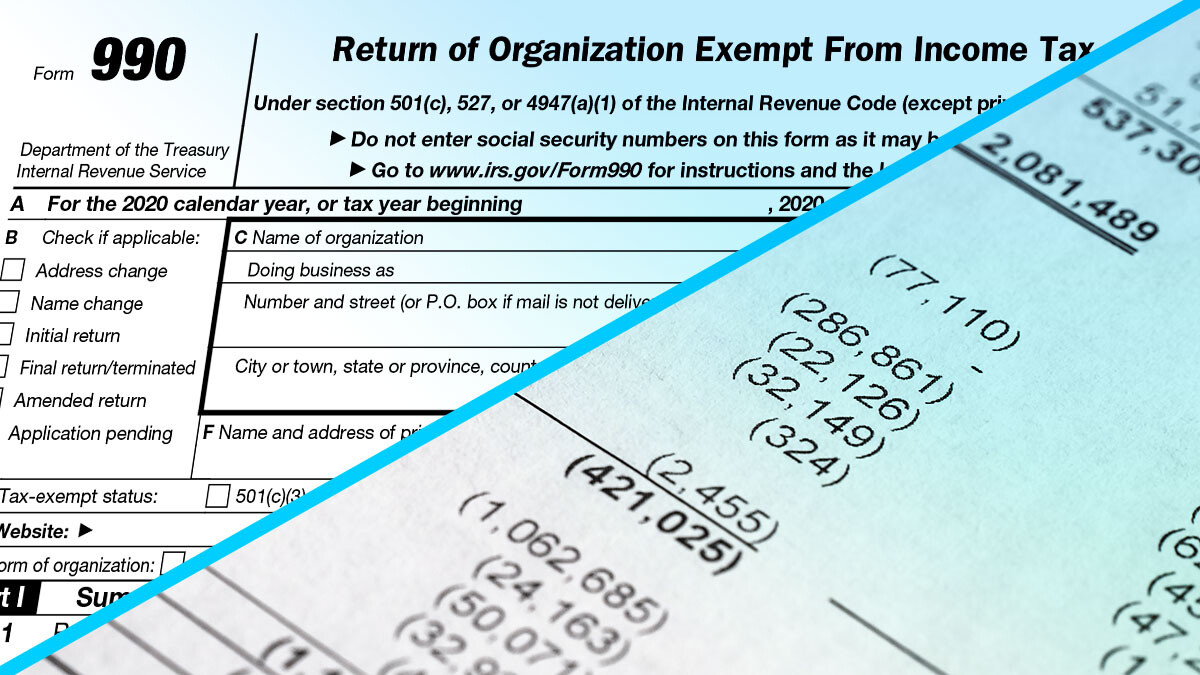
  • Tax Brief: Differences Between Form 990 and U.S. GAAP Financial Statements

    Tax Brief: Differences Between Form 990 and U.S. GAAP Financial Statements

    Reporting Entity

    In accordance with accounting principles generally accepted in the United States of America (U.S. GAAP), some organizations are required to be consolidated for financial statement presentation. However, consolidated Form 990 filings are not allowed unless there is a group exemption. The Form 990 generally includes the activity of disregarded entities that are also consolidated for U.S. GAAP reporting. Such disregarded entities are also disclosed on Schedule R of the Form 990.

    Net Asset Terminology

    U.S. GAAP financial statements now refer to two net asset classifications – net assets without donor restrictions and net assets with donor restrictions pursuant to Financial Accounting Standards Board Accounting Standard Update 2016-14 (FASB ASU 2016-14). However, the net asset terminology reported on the Form 990 was not updated for FASB ASU 2016-14 and still refers to three net asset classifications – unrestricted, temporarily restricted, and permanently restricted. The Form 990 instructions were updated to address the changes in terminology used for net assets pursuant to FASB ASU 2016-14, but the Form has not yet been updated.

    Investments

    U.S. GAAP financial statements report investment income net of investment expenses; however, on the Form 990, the investment income is not reported net of expenses. Rather, investment expenses are reported on Part IX – Statement of Functional Expenses. Investment expenses are presented as a reconciling item on Schedule D, Parts XI and XII for organizations with a U.S. GAAP financial statement audit and on the Form 990, Part XI for those without a financial statement audit.

    Another difference with respect to investment reporting is that on U.S. GAAP financial statements the organization reports unrealized gains and losses on its investments; however, unrealized gains and losses on investments are not reportable on the Form 990 and are presented as a reconciling item.

    Donated Services

    Donated services that meet the criteria for recognition under U.S. GAAP are recognized as revenue and a related expense on the financial statements. However, on the Form 990, donated services are not recognized regardless of recognition on the financial statements. Donated service revenue and expense are presented as a reconciling item on the Form 990.

    Functional Expenses

    FASB ASU 2016-14 requires all non-profit organizations to include a statement of functional expenses in their U.S. GAAP financial statements; however, there are different requirements for the IRS Form 990. The Form 990 instructions require all non-profit organizations to list out expenses by type in column (A) of Form 990, Part IX Statement of Functional Expenses. However, only organizations that are exempt under Internal Revenue Code sections 501(c)(3) or 501(c)(4) are required to complete the functional classification for expenses reported on Form 990, Part IX Statement of Functional expenses, columns (B), (C) and (D).

    Special Events

    U.S. GAAP allows for some flexibility in the presentation of expenses from special events. However, the Form 990 requires direct expenses for special events to be presented as a reduction to related revenue on Form 990, Part VIII Statement of Revenue. This difference in presentation is reconciled on Form 990, Schedule D, Parts XI and XII for organizations with a U.S. GAAP financial statement audit and on the Form 990, Part XI for those without a financial statement audit.

  • Corporate Activity Tax Registration & Key Deadline Reminders

    Corporate Activity Tax Registration & Key Deadline Reminders

    As we approach the midway point of 2021, and the 2nd year of the Oregon Corporate Activity Tax, here are some important reminders for businesses with more than $750,000 in commercial activity in the state of Oregon.

    CAT Registration

    The Department of Revenue reminds business owners that once they have more than $750,000 in commercial activity in 2021, they have 30 days to complete the one-time registration for Oregon’s Corporate Activity Tax.

    Registration for CAT is a one-time requirement, which means businesses that registered in 2020 do not have to register again.

    Registrations totaled more than 20,000 in the first year of the CAT in 2020. In 2021, more than 5,000 additional businesses have registered for the CAT, which was created by the legislature in 2019 to raise funding for education. 

    The CAT applies to both in-state and out-of-state businesses. It is measured on a business’s commercial activity, the total amount a business realizes from transactions and activity in Oregon.

    Businesses with taxable commercial activity in excess of $1 million will have Corporate Activity Tax to pay. The tax is $250 plus 0.57% of commercial activity greater than $1 million after subtractions.

    Taxpayers expecting to owe $5,000 or more for 2021 must make quarterly estimated payments. The next estimated payments are due August 2.


    Key Deadlines:

    •    August 2 — Second quarter 2021 CAT estimated payments due
    •    October 15 — Last day to file 2020 CAT return with an extension
    •    November 1 — Third quarter 2021 CAT estimated payments due
    •    January 31, 2022 — Fourth quarter 2021 CAT estimated payments due
    •    April 15, 2022 — 2021 CAT returns due


    Training aids to assist with registration, calculating the tax, and making payments can be found on the CAT page of the Oregon Department of Revenue’s website.

    If you have general questions about the CAT, you can email cat.help.dor@oregon.gov or call 503-945-8005. For assistance in estimating quarterly tax payments or preparation of the annual CAT tax return, be sure to contact your tax advisory team.


  • Avoid These 2 Pitfalls to Help Your Family Successfully Execute Your Estate Plan

    Avoid These 2 Pitfalls to Help Your Family Successfully Execute Your Estate Plan

    There are few things more certain in life than death and taxes, yet both subjects tend to be a very private subject for the lion share of my clients. When attempting to broach the conversation of wealth transfer or estate planning, I often hear things such as:

    “I’m not worried about it, I’ll be dead.”

    “My son/daughter is a smart cookie — they’ll deal with it.”

    “I think my kids know where everything is going.”

    After eight years of practice in the area of Estate and Trust planning and compliance, I can tell you that “Estate Plans” with no communication to the beneficiaries are rarely carried out flawlessly.

    There are many pitfalls that lead to stalled, contentious, and inequitable Estate Plans — with or without communication to the beneficiaries about one’s plan. I would like to cover two of these pitfalls, and share some thoughts on why they lead to poorly executed Estate Plans.

    Pitfall #1: Co-Trustees

    Co-trustees often arise when there are siblings as beneficiaries. The grantors of the Estate (Mom or Dad) can’t choose one sibling over the other to be in-charge, or they believe that they will have no problem working together. Yet sometimes, parents can forget about sibling rivalries from childhood. Even the best of siblings can still squabble, and siblings with a good relationship can still experience tension just getting through a family Thanksgiving dinner. Perhaps Mom & Dad aren’t remembering that, as co-trustees, their adult children will need to get along for six to eighteen months in order to administer the plan. Successfully administering an Estate Plan requires timely decisions, signatures, and thoughtful action. Adding an additional party to this process will require more time for review and agreement regarding what is to be done next.

    What to do?

    Discuss with your children who is to be the Trustee. Check for willingness and interest in a co-trustee arrangement. Take the time to explain that, if a co-trustee arrangement is made, they will need to agree on each step before it can be taken, and that it will add time to settling the Estate. Having the conversation with your adult children now will set them up for success in the future, because they will have a clear understanding of your wishes and what is expected of them.

    Pitfall #2: Uneven Bequests and Distributions

    Often Mom or Dad have reasons to leave something significant to someone special. Common items are wedding rings, guns, or an old mixing bowl used to make Sunday-morning biscuits. Other items include beach houses, rental houses, or specific tradable securities. In my experience, the greater the difference in value between distributions to beneficiaries, the more likely that litigation and/or stalled Estate Administration will occur.

    What to do?

    This one is pretty short and sweet — tell your children what you are doing. If you don’t have the conversation, you allow for your children to come up with their own reasons for why you preferred one sibling over the other. Two common beliefs arise for the slighted sibling:

    • Mom or Dad liked the other sibling more, or
    • My other sibling convinced Mom or Dad to leave them more.

    Both thoughts are bad situations to put your beneficiaries in after you are gone.

    At the root of most Estate Planning problems you will find poor commination. We love our children and beneficiaries, so we should tell them our wishes enough times that they will remember them. Simply communicating will help lead to your family’s continued cooperation after you pass on.

  • Tax Provisions in the American Rescue Plan Act

    Tax Provisions in the American Rescue Plan Act

    The American Rescue Plan Act has been signed into law and the Act included several tax provisions.  Here are some of those tax provisions affecting many taxpayers:

    Unemployment Benefits

    Taxpayers that had less than $150,000 of Federal Adjusted Gross Income (AGI) in 2020 could see the first $10,200 of unemployment benefits they received become tax-free.

    It will be important to consider the tax treatment in each taxpayer’s resident state.  A taxpayer’s home state may not “conform” with this new tax treatment.  Be on the look out for state legislation either conforming to or disconnecting from the Federal law.

    Additional Recovery Rebates

    The Act creates an additional round of economic impact payments.  The Act provides individuals with a $1,400 recovery rebate credit ($2,800 for married taxpayers filing jointly), plus $1,400 for each dependent.

    The recovery rebate does have a phase out for individual taxpayers beginning at $75,000 Federal AGI and is fully phased out at AGI over $80,000.  For joint filers, the phase out begins at AGI of $150,000 and ends at AGI of $160,000.

    Child Tax Credit

    The Act expands the child tax credit in several ways;

    1. The credit can be fully refundable in 2021,
    2. 17 year old dependent children now qualify, and
    3. Depending on certain factors, listed below, the credit can be received in advance of filing a return.

    The Act increases the amount of the credit to $3,000 per child ($3,600 for children under age 6).  The increased credit does have a phase out at $150,000 for joint filers, $112,500 for head of household, and $75,000 for all others.

    The IRS will have to provide guidance to taxpayer on how to receive the credit in advance of filing the 2021 tax return, and the credit will be reconciled on the 2021 tax return.

    Dependent Care Credit

    The act makes the credit 50% of eligible expenses up to $4,000 for one qualifying individual and up to $8,000 for two or more. Credit reduction will start at household income levels over $125,000. For households with income over $400,000, the credit can be reduced below 20%.

    The act also increases the exclusion for employer-provided dependent care assistance to $10,500 for 2021.

    Family and Sick Leave Credits

    These credits were originally introduced in the Family First Coronavirus Response Act.  This Act increases the limit on paid family leave to $12,000 and has extended it to September 30, 2021.

    Employee Retention Credit

    The Act extends the ERC through the end of 2021.  An eligible taxpayer could receive up to $7,000 per quarter per employee if adversely affected by the pandemic.


    You should consult your tax advisor and discuss how each of the provisions listed in the law could affect your own personal tax situation.

  • A Nonprofit’s Guide to Financial Statement Services: Audit, Review, Compilation, and Preparation

    A Nonprofit’s Guide to Financial Statement Services: Audit, Review, Compilation, and Preparation

    Financial statements are a critical component used by management and boards of nonprofit organizations (NPO) to gauge how well the organization is performing, determine the strength of financial position, and to make informed decisions for the future of the organization. Financial statements are also utilized by a various external users for a variety of reasons.

    Many nonprofits seek out a CPA firm to perform a financial statement audit, review, compilation, or preparation engagement. But what do those services really involve, and how do you determine which one is right for your nonprofit?

    Before deciding on a service, it’s important to know the differences so that you can make an educated decision that will best suit your nonprofit. With each of these services, there are key differences in the scope of the work that the CPA will perform, the cost of the service, and the factors that drive the need for one service over the other.

    The level of service an organization needs depends on the needs of the financial statement users (management & board of directors, external agency, etc.). Each service provides a different degree of assurance (or “reliability”), to the users of the financial statements. The four services to consider are preparation, compilation, review, and audit.

    Preparation

    The CPA’s objective in a financial statement preparation engagement is to prepare the financial statements in accordance with a specified reporting framework. Management provides the CPA with financial records and information needed and the CPA then prepares the financial statements with that information. It’s important to note with this level of service that the CPA is not required to verify the accuracy or completeness of the information provided by management or otherwise gather evidence to express an opinion or conclusion on the financial statements. The CPA is not required to review any underlying support for accounting transactions or perform any analytical procedures. No report is issued. Essentially, this level of service is merely taking the financial records of the organization and putting them into financial statement presentation.

    This level of service could be appropriate for a nonprofit who would like to have financial statements prepared by a CPA. A small to mid-sized nonprofit may seek out prepared financial statements if their accounting team needs the expertise of a CPA in order to prepare financial statements. While CPA prepared financial statements can be used externally, they are generally utilized mostly by management and/or the board of directors internally. The financial statements will make note that “no assurance is provided.”

    Compilation

    The CPA’s objective in a compiled financial statement engagement is to apply accounting and financial reporting expertise to assist management in the presentation of the financial statements. The CPA does not provide any assurance that there are no material modifications that should be made to the financial statements.

    The CPA will read the financial statements and propose adjustments or modifications if anything comes to light that is not materially correct. Unlike a preparation engagement, the CPA’s role is more transparent in a compilation engagement for external users. For example, if the CPA is not independent of the nonprofit in a compilation engagement, this would be required to be disclosed in the report that is issued along with the financial statements. Similar to a preparation engagement, the CPA is not required to review support for underlying accounting transactions, perform analytical procedures, or gain an understanding of internal controls.

    This level of service could be appropriate for a nonprofit who would like to have financial statements compiled by a CPA and would like to go one step further than the preparation engagement in having the CPA issue a report and notify management of any material adjustments or modifications identified during the compilation of the financial statements. Internally, these financial statements could be used by management and the Board. Externally, donors, other grantor agencies or lending institutions may request compiled financial statements from a nonprofit, which can be what drives the need for a compilation engagement.

    Review

    The CPA’s objective in a review engagement is to provide limited assurance that there are no material modifications that should be made to the financial statements. The CPA will make inquiries of management and perform analytical procedures over the accounting records to obtain this level of assurance. Independence is required with this level of service. The CPA will also issue a report that describes management’s responsibilities with respect to the financial statements, the CPA’s responsibilities, and what the CPA’s conclusion is regarding whether or not the CPA is aware of any material modifications that should be made to the financial statements. If the CPA identifies material modifications during the review, the CPA will bring these to the attention of management and give them the opportunity to correct those matters before the final report is issued.

    This level of service could be appropriate for a nonprofit who wants some level of assurance that the financial statements are materially correct. If the nonprofit is obtaining or has significant financing, especially in the case where the financing arrangement has financial covenants, reviewed financial statements may be required by the lending institution. Another scenario that could necessitate a review is a donor/grantor requirement for the grantee to provide annual reviewed financial statements. Aside from these external factors, nonprofits of any size may decide to have annual reviewed financial statements. Knowing that an independent CPA has reviewed and provided limited assurance on the financial statements can give decision makers a greater level of confidence in their ability to rely on the financial statements of the nonprofit.

    Audit

    The CPA’s objective in an audit is to obtain reasonable assurance about whether the financial statements as a whole are free of material misstatement and to express an opinion on whether the financial statements are presented fairly, in all material respects, in accordance with the applicable framework. An audit results in the highest level of assurance that a CPA can provide. The CPA is required to be independent in order to perform an audit. The audit process is very involved. The CPA is required to obtain an understanding of the internal controls of the nonprofit and perform risk assessment procedures. The CPA will also perform substantive and analytical procedures which includes reviewing support for underlying accounting transactions and reviewing results of analytics which are used as a whole to substantiate the auditor’s opinion on the financial statements. The CPA will often request that management provide things like bank statements and reconciliations, significant contracts and agreements, invoices, check copies, detailed receivable and payable aging schedules, and other records that support the accounting transactions in the books.

    This level of service could be appropriate for a nonprofit who has an external reporting requirement. This requirement could come from a grantor agency who provides the nonprofit with significant funding or a lending institution. The need for an audit could also arise for a nonprofit who has significant federal award expenditures. More often than not, nonprofits that have an annual audit performed have some type of external agency that requires audited financial statements. With that said, there are some nonprofits that do choose to have an annual audit even when there is no external requirement to do so. This typically arises with mid-size to larger nonprofits who want the highest level of assurance from an independent CPA to give them the confidence that the financial statements are presented fairly in all material respects.

    Service Comparison

      Preparation Compilation Review Audit
    Assurance Provided No No Limited Assurance Reasonable Assurance (defined as high, but not absolute)
    Report Provided No Yes Yes Yes
    Opinion is given in a report as to whether or not the financial statements are presented fairly, in all material respects, in accordance with the applicable framework No No No Yes
    CPA is required to obtain an understanding of the NPO’s internal controls and perform a risk assessment No No No Yes
    CPA is required to make inquiries of management and perform analytical procedures No No Yes Yes
    CPA is required to be independent No No; however, if the CPA is not independent, the lack of independence is required to be disclosed in the report Yes Yes
    Cost Least expensive More expensive than a preparation engagement, less than a compilation or review More expensive than a preparation or compilation engagement, less than an audit Most expensive

    Each nonprofit has a unique set of needs and factors to consider when choosing CPA services. If you have questions about which service might be right for your nonprofit, we encourage you to fill out the “Connect with an Advisor” form on our Contact Page for further guidance.

  • Tax Brief: Form 990, Schedule M – Noncash Contributions

    Tax Brief: Form 990, Schedule M – Noncash Contributions

    From donated clothing to medical supplies to securities, non-cash contributions are a vital form of support of many non-for-profit organization.

    The IRS Form 990 Schedule M is used to report information about non-cash contributions received by a not-for-profit organization. The schedule is required for organizations that received in aggregate more than $25,000 worth of non-cash contributions during the tax year.

    The organization also must complete the schedule if it received a donation of any work of art, historical treasure or artifact, scientific specimen, or any qualified conservation contributions regardless of the donation value. While the schedule covers virtually all non-cash goods, it should not be used to report donations of services or the donated use of facilities, equipment, or materials. Management of not-for-profit organizations that receive non-cash contributions should familiarize themselves with Schedule M and its reporting requirements.

    Part I – Donated Property

    The first part of the Schedule is designed to summarize the non-cash contributions based on the types of property that were received. This consists of a matrix that lists 24 different property types covering virtually any kind of non-cash contribution a non-profit could receive. The schedule also provides four additional lines for any donations that don’t fall within those 24 types.

    For each type, the organization must detail the number of contributions or items contributed, non-cash contribution amounts reported on Part VIII, Line 1g (Statement of Revenue), and the method that was used to determine the non-cash contribution amounts. Organizations can save a considerable amount of time and effort by developing internal processes for tracking this information throughout the year rather than waiting until its time to prepare the tax return to piece it together.

    Part I of the form also asks the not-for-profit organization to report how many Forms 8283 (Noncash Charitable Contributions) were received and completed by the organization. Additionally, part I includes some questions related to policies and procedures for accepting non-cash donations and reporting with respect to non-cash donations.

    Part II – Supplemental Information

    The supplemental information portion of the Schedule is primarily used to provide additional detail about any holding period requirements for donated assets or use of third parties to solicit, process, or sell non-cash contributions.

    Part II is also used to describe whether the non-profit is reporting the number of contributions, the number of items contributed, or some combination of the two for each type of property from Part I.


    The purpose of this article is to summarize the major components and reporting requirements of Schedule M and is not intended to be all encompassing or serve as replacement for the Form’s instructions.

    This article is meant to be a resource and provide tools to assist your organization. Please consult your tax advisor regarding your specific tax situation.

  • Individual Tax Filing Deadline Moved to May 17th

    Individual Tax Filing Deadline Moved to May 17th

    The IRS announced on Wednesday March 17th, 2021 that the federal income tax filing due date for individuals for the 2020 tax year will be automatically extended from April 15, 2021, to May 17, 2021. 

    The postponement does not apply to estimated income tax payments that are due on April 15, 2021. These payments are still due on April 15.

    The postponement does not apply to any other type of federal tax or to any federal information returns.

    Consequently, Jones & Roth CPAs and Business Advisors is asking its clients to continue to have all tax documentation to us as planned by March 22nd.

    The Association of International Certified Professional Accountant (AICPA) has reported: “Many taxpayers will not benefit from the extended deadline. The failure to include estimated payments nullifies any benefit of a postponement, since the tax return work has to be done to calculate estimated payments…More than 9.5 million individual returns filed in for the 2018 tax year included estimated payments.”

    Read the Full AICPA Update

    For state-specific information, and to determine whether your state is extending the filing deadline, please refer to your state’s Department of Revenue website. 

    If you have questions or need further guidance, contact your Jones & Roth CPA.